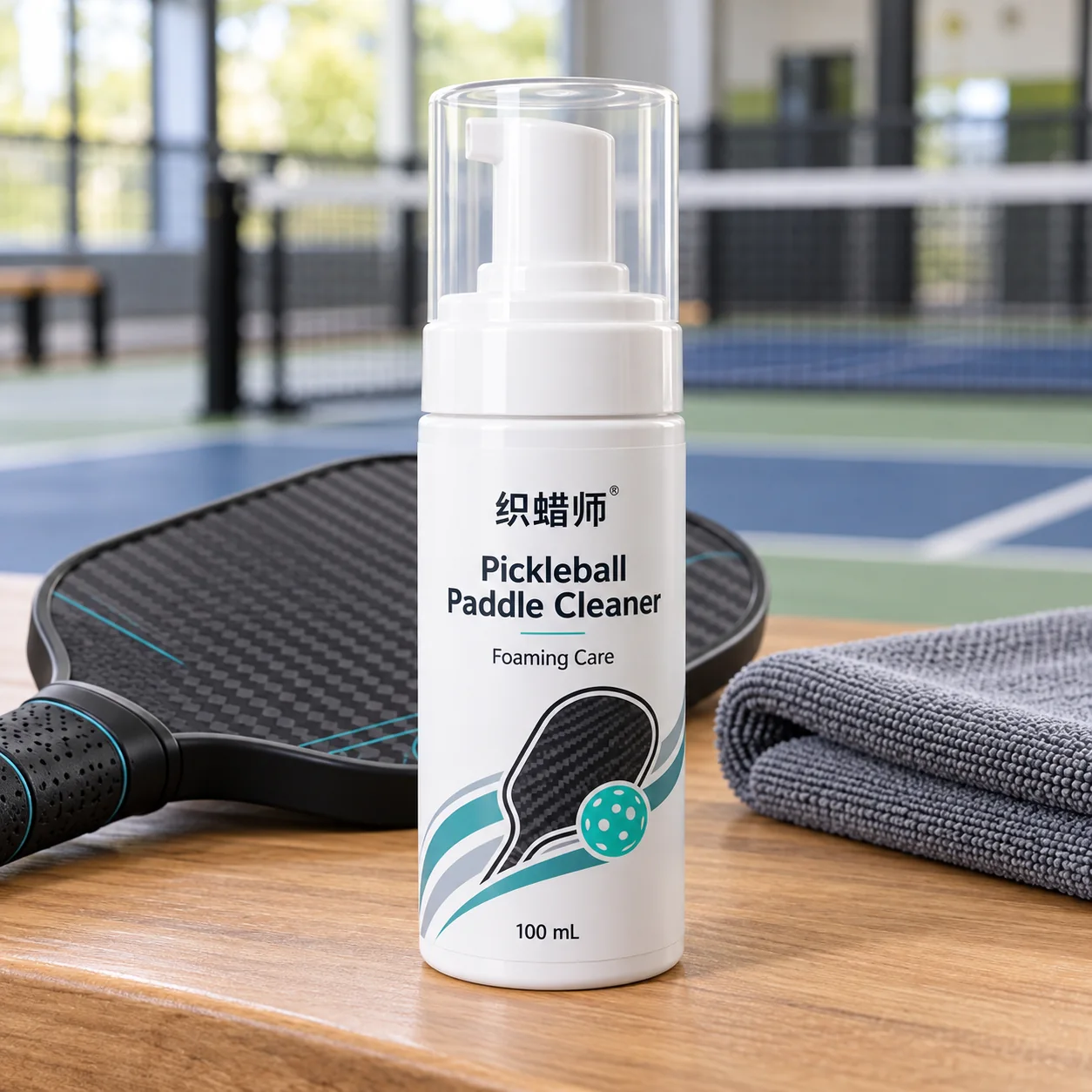
Pickleball participation has created demand not only for paddles and bags, but also for practical care accessories. A private label pickleball paddle cleaner can give sports brands, retailers and clubs a repeat-purchase product that supports the equipment customers already own. The opportunity is strongest when the cleaner, bottle and instructions are designed around real paddle-care habits rather than broad claims that one product is suitable for every surface.
For brands selling in the United States or Europe, the development brief should define the target paddle materials, the type of residue to be removed, the preferred dispensing format and the intended sales channel. These choices affect formula direction, packaging, compatibility testing and label language.
Start With the Target Paddle Range
Pickleball paddles can use carbon-fiber, graphite, fiberglass, coated, textured or printed faces. Edge guards, adhesives and exposed construction details can also vary. A useful supplier brief therefore begins with the actual paddle range rather than a generic request for a “universal” cleaner.
- List the paddle materials and surface finishes in scope.
- Identify whether the cleaner is for routine dust, sweat, fingerprints or normal play residue.
- Confirm whether customers will clean at home, courtside or inside a retail service program.
- Provide the destination market and the claims you intend to place on the label.
Compatibility should be evaluated on representative samples before the final label is approved. Avoid unsupported claims such as “safe for every paddle,” “restores spin” or “cannot damage graphics.” The paddle manufacturer’s care instructions should remain the primary reference for the end customer.
Why Controlled Foam Works Well for Routine Care
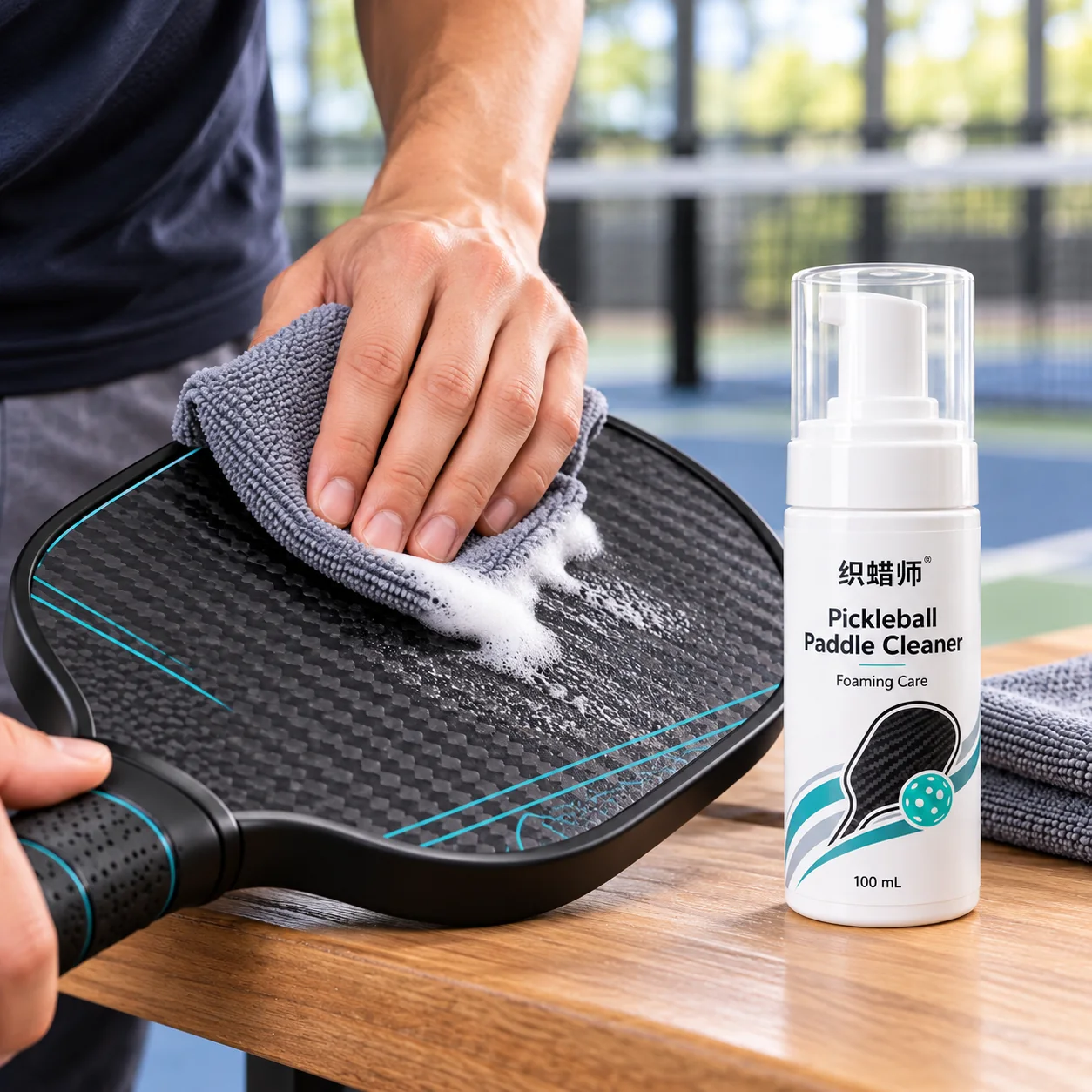
A non-aerosol foam pump can provide a small, visible amount that is easy to place on a microfiber cloth. Compared with an open-pour bottle or an aggressive direct spray, controlled foam can help limit run-off and reduce over-application near edges or openings.
The formula should spread easily, lift normal play residue and wipe away without leaving a heavy film. Buyers should also review foam density, collapse time, fragrance, drying behavior and the appearance of both dark and light paddle surfaces after cleaning.
Build the Package Around Portability
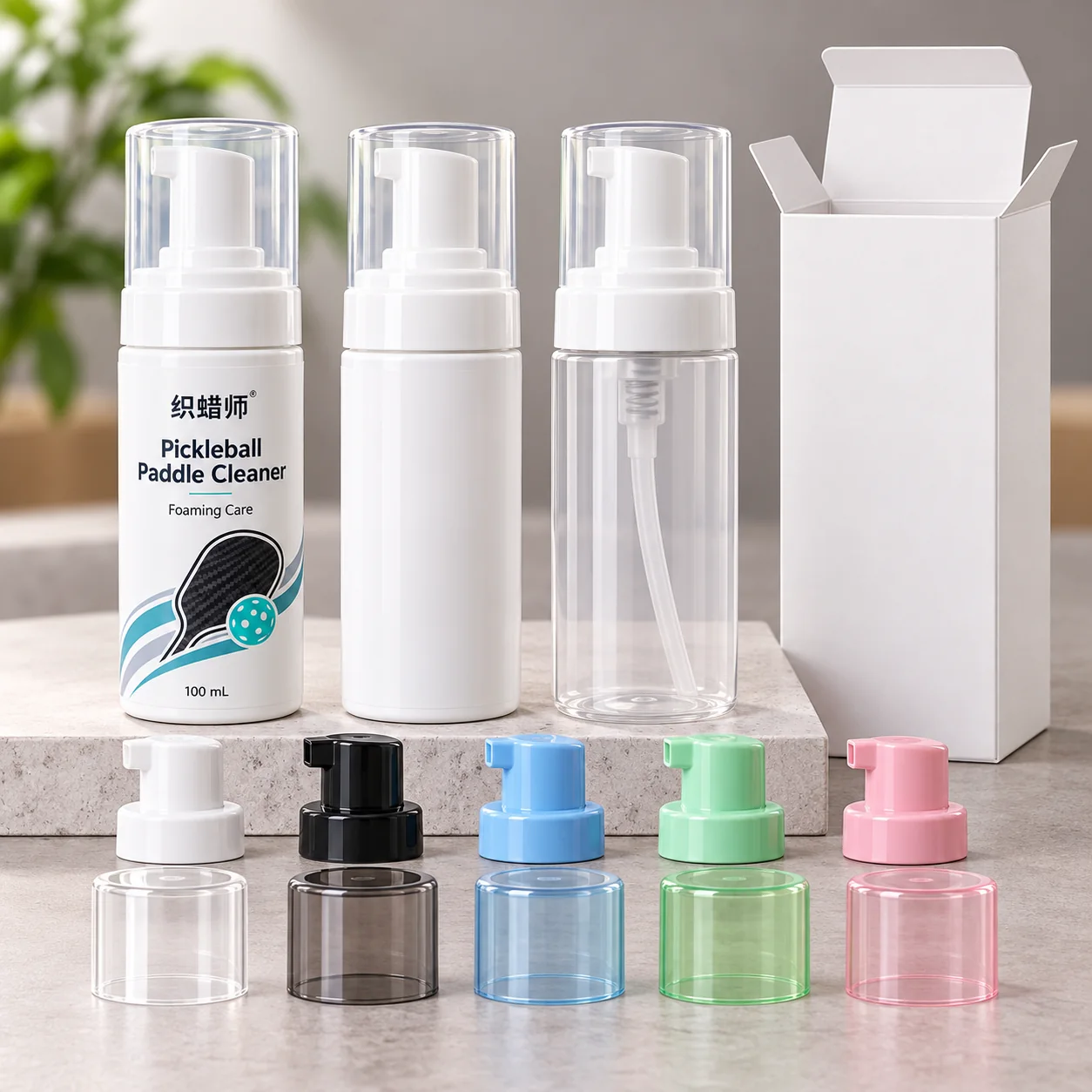
A 100ml foam pump bottle is compact enough for a paddle bag, club counter or e-commerce accessory kit. The protective overcap helps keep the pump clean during transport, while a clear label can carry short directions and compatibility cautions.
Packaging evaluation should cover more than appearance. The approved formula, pump, bottle, overcap, label and shipping carton should be tested as a system. Check dispensing consistency, leakage after vibration, cap retention, label adhesion and whether the pump still performs after repeated use.
Use a Practical Compatibility Test Plan
Sample approval should reflect how customers will actually use the product. Test a defined amount with the recommended cloth on representative paddle surfaces, then record cleaning performance and appearance after drying. Repeated-use testing is also useful because residue or surface change may not be obvious after a single application.
- Compare untreated and cleaned areas under consistent lighting.
- Review printed graphics, textured faces, edge guards and coated samples separately.
- Check for haze, streaks, tackiness, discoloration or unwanted residue.
- Confirm the directions prevent liquid from entering openings or exposed edges.
- Evaluate the bottle and pump after storage at expected transport temperatures.
Testing does not need to promise improvement in paddle performance. The commercial purpose is to offer a convenient routine-care product with clear limitations and repeatable instructions.
Prepare a Complete OEM Request
A good request for quotation should include the target paddle types, desired formula direction, 100ml bottle preference, pump and overcap colors, label dimensions, destination country and estimated order quantity. Reference products can show the desired cleaning experience, but the supplier still needs to understand which attributes are essential.
TexCera Custom supports formula discussion, sample coordination, packaging selection, private label application and small-batch production. Minimum orders can start from 100 units depending on the approved formula, bottle components, label and outer packaging.
Before production, confirm the approved sample, filling specification, component colors, label artwork, carton configuration and acceptance criteria. A written specification reduces the chance of mismatched pumps, labels or directions during repeat orders.
Position the Cleaner as Part of a Paddle-Care Kit
The cleaner can be sold as a stand-alone accessory or bundled with microfiber cloths, a pouch and simple care instructions. Retailers may place the kit near paddles and bags, while clubs can offer it at reception or include it in membership packages.
Keep claims focused on routine cleaning and convenience. The product page should explain the compatible surfaces in scope, the 100ml foam format, how to apply it and why users should test a small area first. See the private label pickleball paddle cleaner product page for packaging and OEM options, or explore the broader Specialty & Hobbies range.
Frequently Asked Questions
Why use a foam pump instead of a trigger spray?
A foam pump dispenses a small, controlled amount and can help reduce run-off. The recommended method is to apply the foam to a clean microfiber cloth rather than directly into openings or exposed edges.
Can the cleaner be used on every pickleball paddle?
No universal compatibility claim should be made without testing. Paddle materials, coatings, textures and printed graphics vary, so the approved formula and directions should be evaluated on the intended paddle range.
Can the formula and fragrance be customized?
Formula direction, foam profile, fragrance and cleaning strength can be discussed during sample development. The final scope depends on stability, compatibility, destination-market requirements and order quantity.
What is the minimum order quantity?
Minimum orders can start from 100 units. The final MOQ depends on the formula, foam bottle, pump, overcap, label and outer packaging.
Can I request a sample before production?
Yes. Provide target paddle materials, the desired cleaning experience, destination market, packaging preference and estimated order quantity so a relevant sample plan can be discussed.
Discuss Your Private Label Pickleball Cleaner Project
Send TexCera Custom your paddle range, brand brief, packaging preference and launch quantity. We can discuss a practical 100ml foam format, sample route and low-MOQ production plan for your market.