Floor care is a repeat-purchase category, but a successful private label product needs more than an attractive bottle. The formula must match the intended surface, the application method must be easy to understand, and the package must protect the product throughout filling, transport and normal consumer use.
For brands selling in the United States or Europe, the first step is to define a narrow product brief. “Floor polish” can describe very different products, including cleaners, maintenance emulsions, protective finishes and professional restoration systems. A clear brief helps the manufacturer recommend the right formula direction, testing plan and packaging format.
Define the Surface and Customer Before the Formula
Start by identifying where and how the product will be used. A maintenance emulsion for sealed residential wood floors has different requirements from a product for laminate, vinyl or commercial flooring. Important questions include:
- Which floor materials and finishes are in scope?
- Is the product intended for routine maintenance or occasional restoration?
- Will customers apply it by hand, microfiber pad, mop or machine?
- Should the finish be natural, satin or higher gloss?
- Is the product aimed at households, cleaning professionals or retailers?
Avoid making broad compatibility claims before the final formula has been evaluated on representative surfaces. A focused initial claim is usually easier for customers to understand and easier for a brand to support.
Choose a Clear Product Position
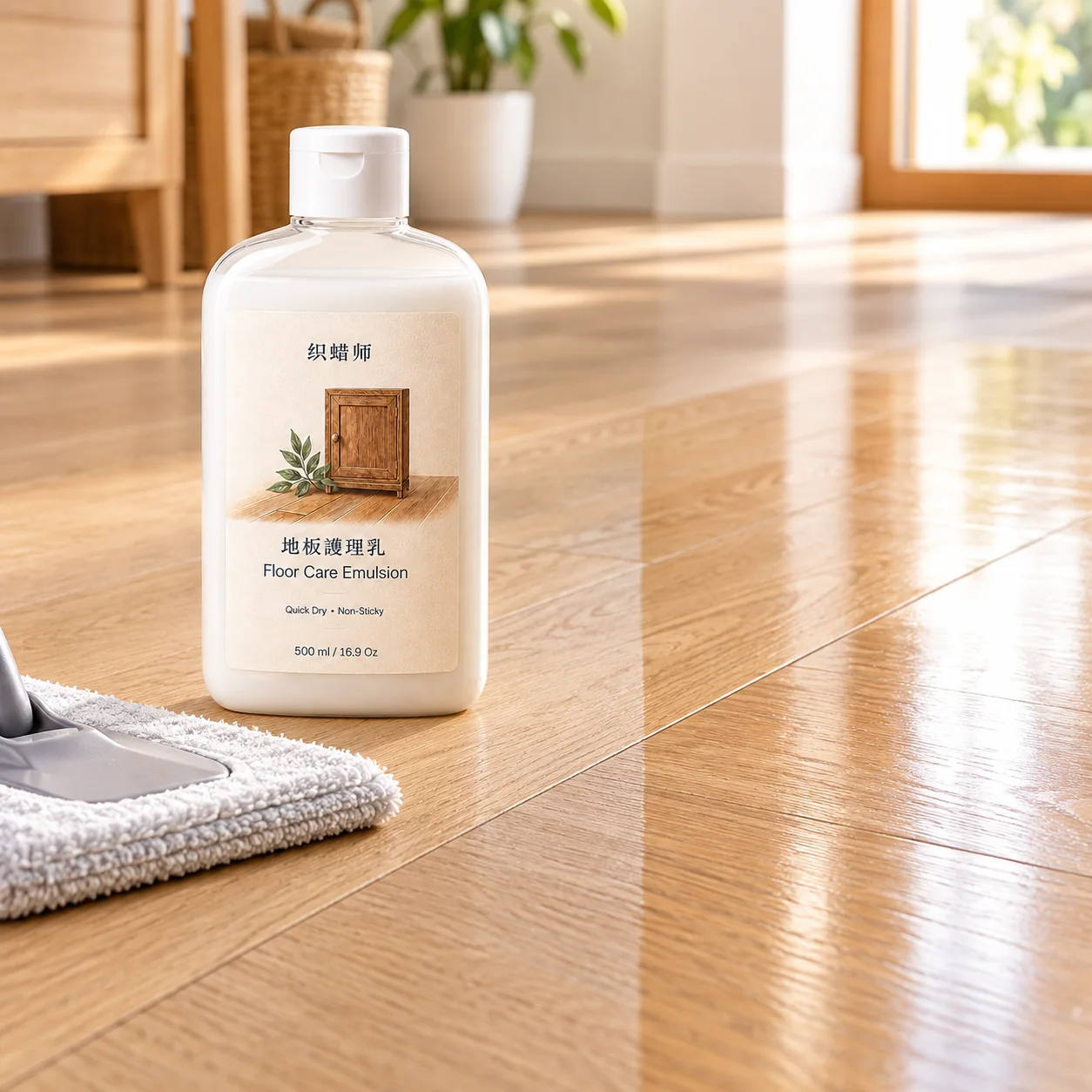
A private label floor care line can be positioned around convenience, finish appearance, professional application or a coordinated maintenance routine. The product page and label should explain what the product does, which surfaces it is designed for and how it fits into the customer’s cleaning process.
- A ready-to-use maintenance emulsion for sealed wood and compatible laminate floors.
- A concentrated product for professional or refill applications.
- A coordinated cleaner-and-conditioner system.
- A retail kit that includes an applicator pad and clear step-by-step instructions.
Claims such as “non-slip,” “scratch proof,” “non-toxic” or “safe for every floor” should not be added without appropriate evidence and market-specific review.
Evaluate Finish, Drying and Residue
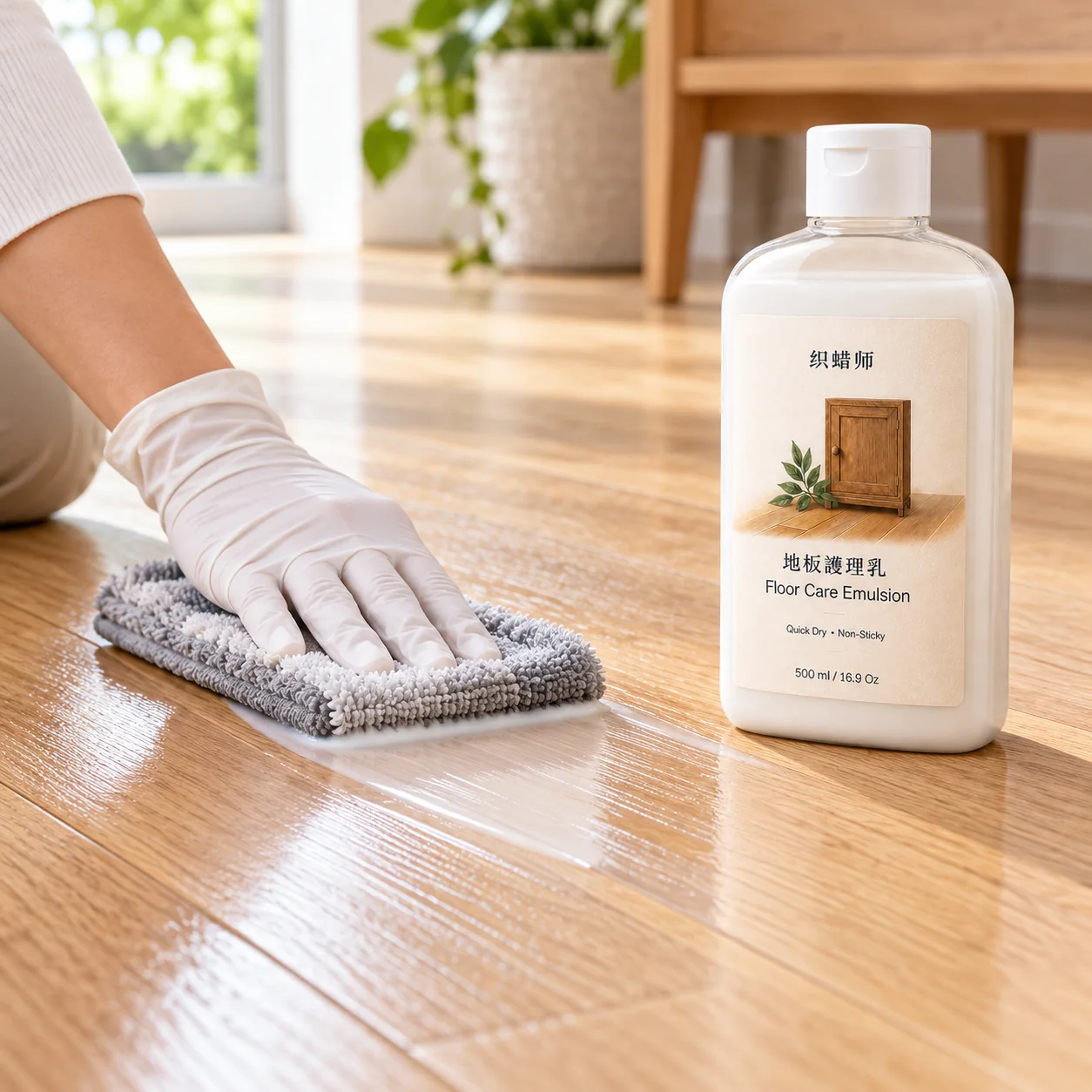
Performance testing should reflect real use rather than only the appearance of a freshly coated sample. Buyers should review how evenly the product spreads, how quickly it dries, whether it leaves tackiness or streaks and how the surface looks after normal foot traffic and cleaning.
- Untreated versus treated floor panels.
- Light and dark wood finishes.
- One thin application versus multiple applications.
- Different microfiber pads or mop systems.
- Appearance immediately after drying and after a defined wear period.
The goal is not simply maximum gloss. Many consumers prefer a natural or satin appearance that refreshes the floor without creating an artificial film.
Match Packaging to Viscosity and Application
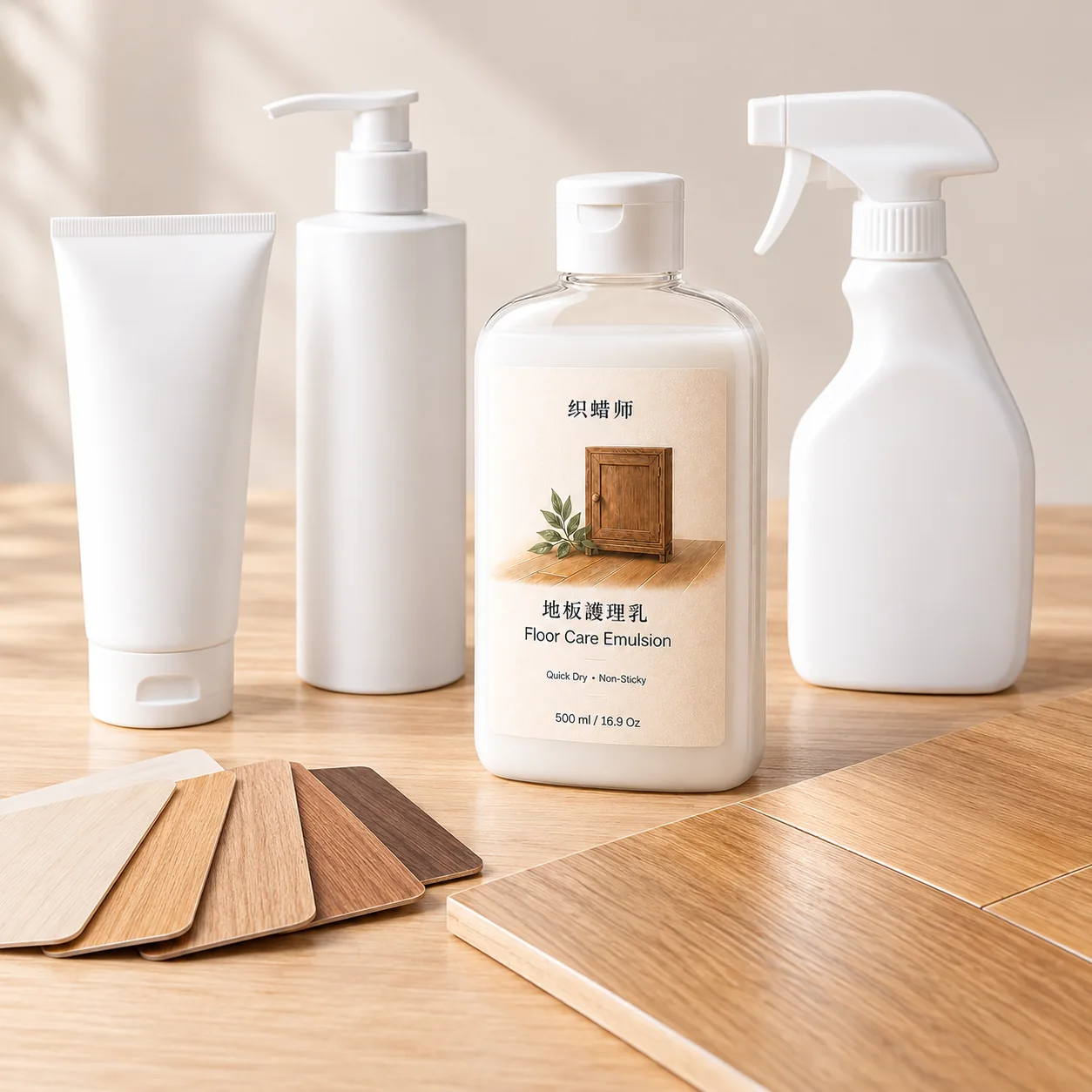
Bottle shape, closure and fill size influence both production and customer experience. A controlled-pour cap can help customers apply a thin line of product, while a trigger or pump may suit other viscosities and routines. The final package should be tested with the approved formula because a closure that works with water may not perform the same way with an emulsion.
- Bottle and closure compatibility.
- Dispensing rate and mess control.
- Label adhesion if product reaches the bottle surface.
- Leakage during storage and parcel delivery.
- Instructions that remain readable after repeated handling.
- Refill, professional and consumer pack sizes.
Stock packaging with an applied private label can support a lower starting quantity. Custom molds, direct printing and bespoke closures generally require more time and a higher commitment.
Build a Practical OEM Brief
A useful request for quotation should include the target surface, desired finish, application method, preferred pack size, destination market, sales channel and expected order quantity. Reference products can communicate a direction, but the manufacturer still needs to understand which features matter most.
TexCera Custom supports small-batch private label projects with formula discussion, packaging selection, sample coordination, label application and production planning. Minimum orders can start from 100 units depending on the final formula and package.
Before production, confirm the approved sample, packaging components, label artwork, filling specification, carton configuration and acceptance criteria. Keeping these details in one specification reduces the risk of a visually similar but functionally different component being substituted later.
Connect Floor Care With a Broader Home-Care Range
Floor care can be sold as a stand-alone product or as part of a coordinated home-care collection. Brands may combine a private label floor care emulsion with furniture wood conditioner, orange oil polish or other products in the Kitchen & Wood Care range.
Use consistent naming, packaging colors and instructions so customers can distinguish cleaning, conditioning and finishing steps. A small, coherent range is usually easier to explain and launch than a large group of overlapping products.
Frequently Asked Questions
What is the minimum order quantity for a private label floor care product?
Minimum orders can start from 100 units. The final MOQ depends on the formula, bottle, closure, label and other customization requirements.
Can I request a floor care sample before production?
Yes. Provide the target surfaces, preferred finish, pack size, market and estimated order quantity so the sample can be planned around your intended use.
Can the formula be customized?
Formula direction, finish profile, viscosity and application method can be discussed during development. The scope of customization affects sampling time, testing and MOQ.
Which packaging is best for floor care emulsion?
The best package depends on viscosity, application routine, fill size and sales channel. The final bottle and closure should be evaluated with the approved formula.
Can TexCera support US and European brands?
TexCera Custom works with brands targeting the United States and Europe. Buyers should provide the destination market and intended claims early so labeling and documentation needs can be reviewed before production.
Discuss Your Private Label Floor Care Project
Send TexCera Custom your target surface, product position, packaging preference and estimated order quantity. We can discuss a practical sample route, low-MOQ launch format and next steps for your brand.