Packaging is one of the most important decisions in a private label cutting board oil project. The formula may perform well on wood, but a bottle that leaks, dispenses too quickly or arrives with a damaged label can create refunds and poor customer reviews. For brands selling through Amazon, retail stores or direct-to-consumer channels, the package must protect the product and make the application routine easy to understand.
This guide explains how buyers can evaluate bottles, closures, labels, seals and shipping configurations before approving a private label cutting board oil for the United States or Europe.
Start with the Product Format and Customer Routine
Define how customers will use the oil before selecting a bottle. A small maintenance product for home kitchens has different requirements from a refill size for woodworkers, restaurants or board manufacturers. Consider the expected application amount, frequency of use and whether the customer pours the oil directly or applies it with a cloth.
- Consumer bottle: compact size, controlled dispensing and clear directions.
- Professional size: larger volume and efficient refilling for repeated use.
- Gift or care kit: coordinated bottle, wax, cloth and outer carton.
- E-commerce format: closure and secondary protection designed for parcel delivery.
A manufacturer should review the formula and package as one system. Viscosity, bottle material, closure geometry and the application method all influence the customer experience.
Choose a Bottle Material That Fits the Formula
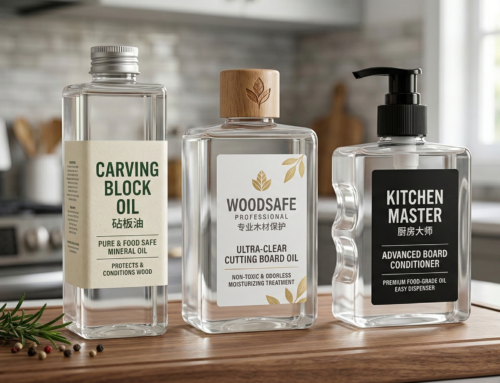
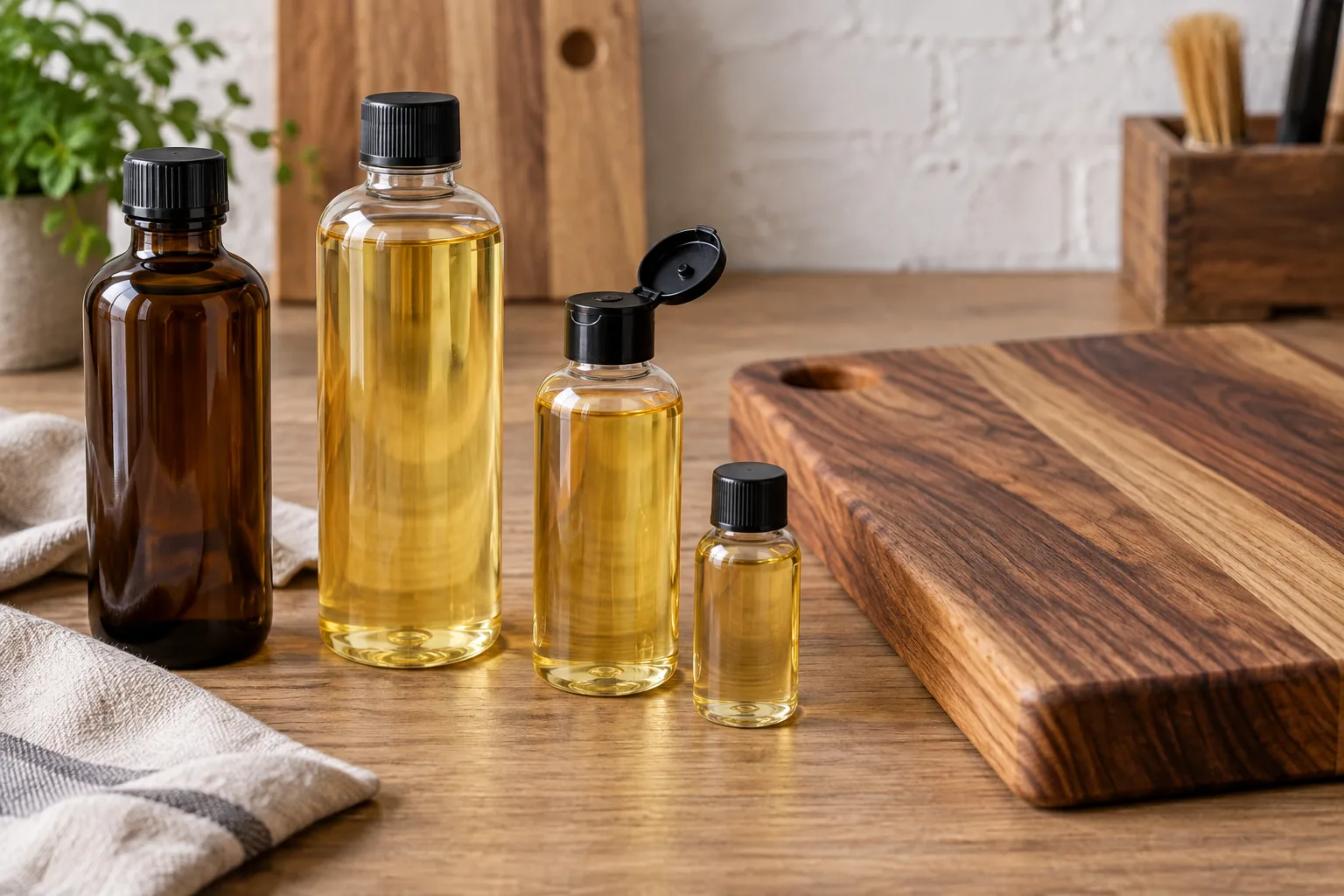
Buyers commonly compare plastic, glass and metal packaging. Each option creates different tradeoffs in weight, impact resistance, appearance and cost. The correct material depends on the approved formula and the distribution channel.
Plastic bottles can reduce shipping weight and breakage risk, while glass can support a premium presentation but needs stronger parcel protection. Metal containers may suit some brand concepts, but the formula, lining and closure still require compatibility review. Do not select a package from appearance alone; ask the manufacturer to evaluate it with the final oil.
Control the Pour with the Right Closure
Cutting board oil is usually applied in a controlled layer. A wide opening can make the product easy to fill but difficult for consumers to dose. Flip-top caps, disc-top closures, reducer inserts and narrow nozzles can offer more control, depending on the viscosity and bottle neck.
During sample testing, check how the closure opens, dispenses and reseals. Look for oil around the threads, cap liner or nozzle after repeated use. The approved closure should be recorded in the production specification so a visually similar substitute is not used without review.
Evaluate Leakage Before E-commerce Launch
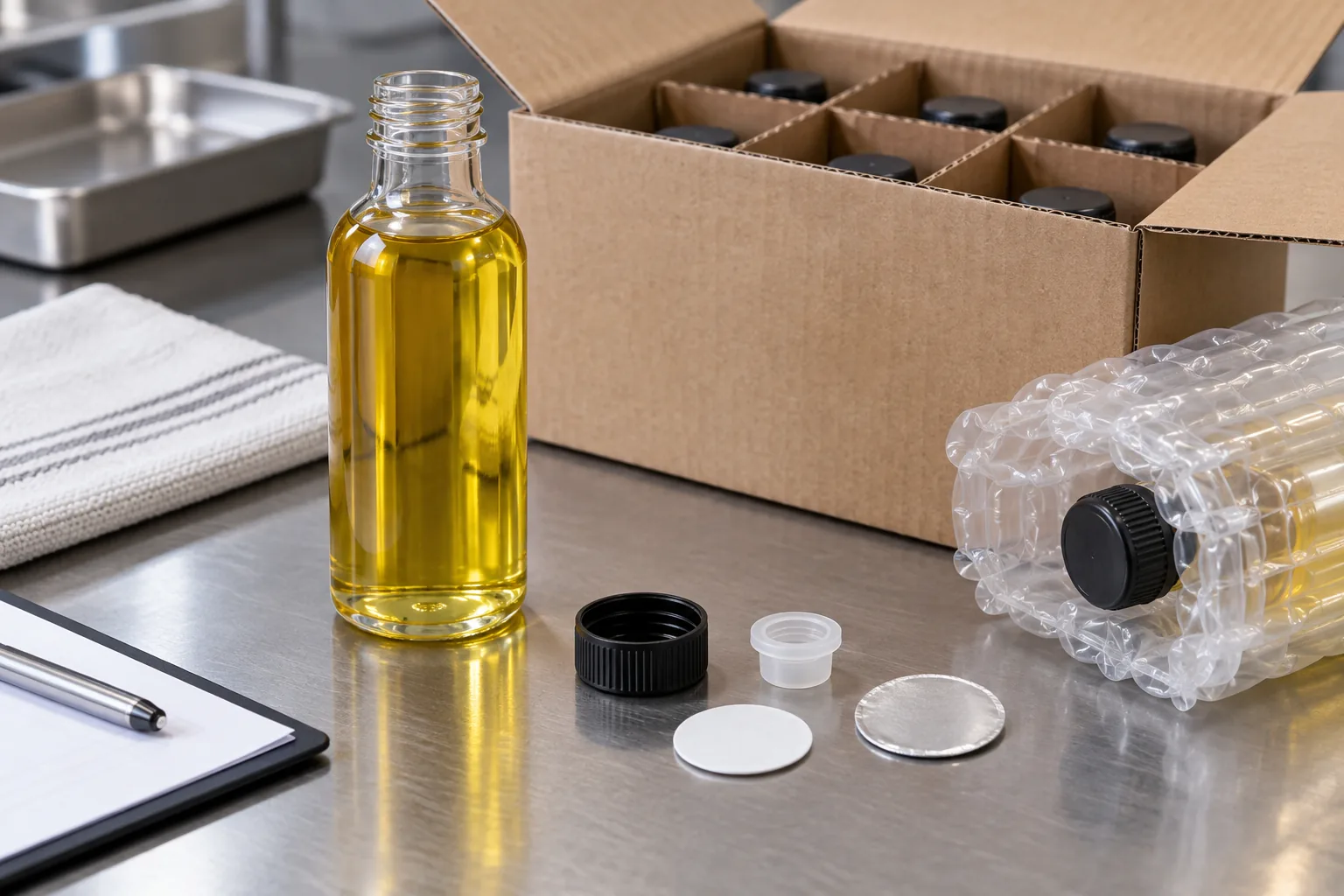
Parcel delivery exposes packages to vibration, changing orientation and handling pressure. Leakage prevention therefore requires more than tightening the cap. The bottle, neck finish, liner, induction seal or other secondary seal, closure torque and shipping carton must work together.
Ask how the filled package will be checked and whether the proposed configuration reflects the intended sales channel. A protective bag or absorbent component may be appropriate for some kits, but it should not replace a compatible primary package. Transport requirements depend on the final formula, quantity and destination.
Plan Labels for Oil, Handling and Storage
Label stock, adhesive and surface preparation affect how a package looks after filling and use. Oil on the bottle surface can weaken label adhesion or create staining. Buyers should evaluate the label on the selected container and confirm that the label size fits the printable area without lifting around curves or seams.
The artwork should leave enough space for verified product information, directions, warnings, responsible-party details and market-specific requirements. Avoid adding claims such as “food safe,” “natural” or “non-toxic” until they have been reviewed against the approved formula and supporting information.
Coordinate Primary and Secondary Packaging
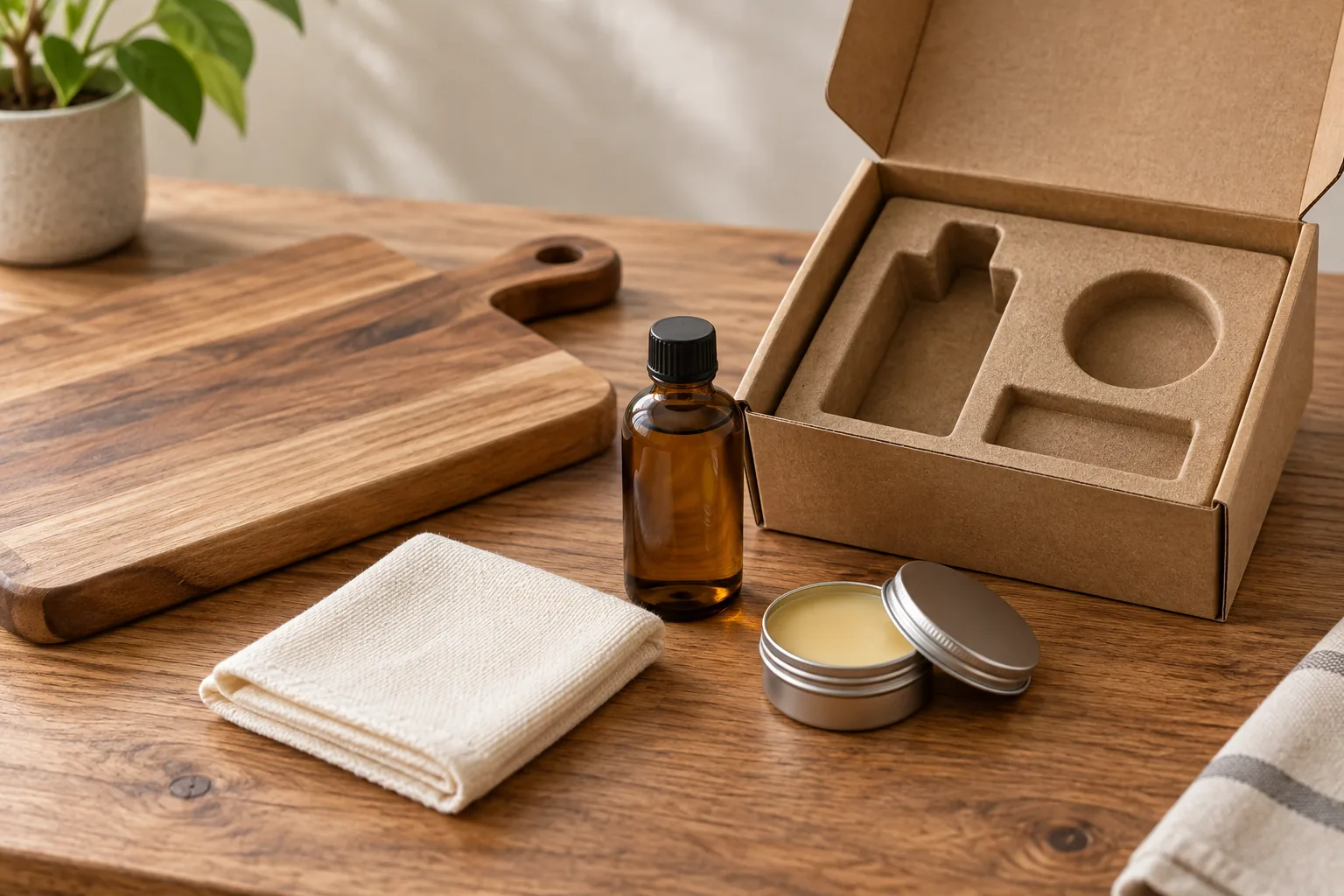
An outer carton can protect the bottle, create shelf presence and provide room for instructions. Care kits can combine oil with a protective wax, cleaning product or application cloth. Consistent colors, typography and product naming help customers understand how each item fits into the maintenance routine.
When requesting a quotation, specify whether you need a filled bottle only, a labeled retail unit, a printed carton or a complete kit. Each component can affect the minimum order quantity, artwork lead time and packing process.
Understand MOQ and Customization Tradeoffs
Stock bottles and applied labels usually support a more flexible starting quantity than custom-molded containers, direct printing or fully bespoke closures. A growing brand can launch with a proven stock format, collect customer feedback and introduce more specialized packaging after demand is established.
Ask whether the quoted MOQ applies to each formula, bottle size, label design and carton version. Also clarify which packaging components must be purchased in larger quantities than the finished-product order.
Prepare a Clear Packaging Brief
A useful brief should include the target customer, sales channel, formula type, preferred fill volume, bottle material, closure style, label method, outer packaging, destination market and estimated order quantity. Reference images can communicate a visual direction, but final choices should be based on compatibility and practical use.
TexCera Custom supports private label formula development, packaging selection, label application and small-batch production. Explore our private label cutting board oil, cutting board wax, cutting board soap and complete Kitchen & Wood Care range.
Frequently Asked Questions
Which bottle is best for cutting board oil?
There is no single best package for every brand. The choice depends on formula, fill size, application method, positioning and distribution channel. Test the selected bottle and closure with the final oil.
Can I start with a low MOQ and change packaging later?
Often, yes. Stock packaging with an applied label can provide a practical starting route. More customized components can be considered after order volume and customer preferences are clearer.
Should cutting board oil include an induction seal?
The appropriate sealing method depends on the bottle, neck, closure, formula and shipping requirements. Review the complete configuration with the manufacturer instead of selecting one component in isolation.