A few days ago, a top-tier North American seller of premium wooden cutting boards came to my office for tea. He looked stressed: “Traffic is way too expensive right now. The margins on a $50 board are entirely eaten up by ad spend. In such a red ocean, why would I bother launching a cutting board oil? Isn’t that just asking for trouble and adding supply chain pressure?”
I pushed a cup of tea across the table and asked him point-blank: “Do you really think adding a cutting board oil is about squeezing out a few extra bucks in margin? Your moat is leaking, and you don’t even realize it.”
Let’s lay it all out on the table today. If you are a wood products seller fighting in a red ocean, here is exactly why you need a reliable cutting board oil OEM partner to inject this SKU into your product line ASAP.

Cutting Boards Are a One-Time Sale — But Maintenance Earns “Lifetime Value”
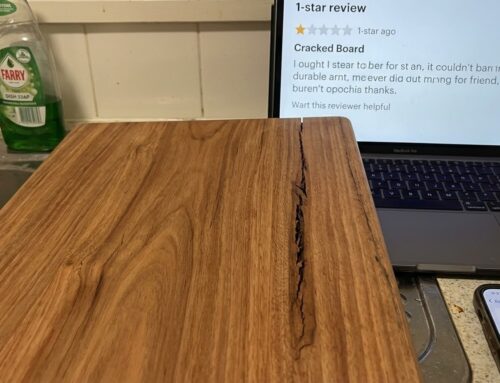
Selling wooden cutting boards has a fatal flaw: customers buy them, don’t maintain them, and when the board cracks or molds a few months later, they blame you.
Imagine a premium oak board getting ruined just because a customer smeared generic cooking oil all over it, leaving a foul, rancid stench. Next thing you know, your backend is flooded with a 500-word 1-star review. Do you really deserve to take the fall for that?
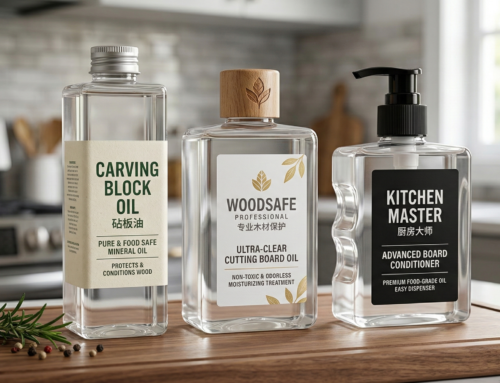
Adding a professional cutting board oil with your own custom label serves two fundamental purposes:
- The Defense Mechanism: You hand the professional maintenance solution directly to the buyer. This eliminates the unjustified negative reviews caused by “poor maintenance” and protects your core product’s Listing weight.
- Infinite Repurchase: A cutting board is replaced every few years. A bottle of high-quality conditioning oil hits the bottom in a few months. You are transforming a low-frequency purchase into a high-frequency cash machine.
Don’t Mess with the Formula: Market Traps Can Ruin Your Brand
Want to tap into this incremental market? Think you can just find a factory, bottle some random oil, slap a label on it, and call it a day? Brands that do that rarely survive past six months. The waters of formulation run deep.
Many amateurs share an incredibly foolish misconception: they think mineral oil is synonymous with “cheap,” and that you must use pure plant-based oils to look premium. Total bullshit. Mineral oil is neither cheap nor low-end.
The Industry Foundation: The Indispensable Food-Grade Formula
High-purity USP (Food-Grade) mineral oil has hardcore physical properties. Its molecules are tiny, its penetration is extreme, and best of all, it is absolutely stable. It never oxidizes. It never stinks. For the vast majority of households doing high-frequency daily maintenance, it is the undisputed, irreplaceable base.
You must force your OEM factory to use this. Using industrial or cosmetic-grade mineral oil to cut costs is playing Russian roulette with your customers’ health and your store’s compliance.
The Premium Upsell Weapon: The Pure Vegan Strategy
Pure plant-based oils do signify a higher tier. They are perfect for vegan-friendly consumers or the extreme eco-conscious crowd. But this doesn’t diminish the role of mineral oil — they are simply weapons for different market segments.
Using pure plant oils mixed with natural waxes for your high-end line requires serious R&D from the factory to prevent oxidation. Otherwise, give it a few months, and it will smell like rotten fat.
| Formula Type | Key Ingredient | Best For | Risk if Done Wrong |
|---|---|---|---|
| Standard Maintenance | USP Food-Grade Mineral Oil | Daily-use, mass market | Industrial-grade = health hazard + Amazon Hazmat flag |
| Premium Conditioner | Mineral Oil + Beeswax / Carnauba | Mid-to-high-end brands | Wrong wax ratio = sticky residue, bad UX |
| Vegan / Eco Line | Plant Oils + Natural Wax | Eco-conscious, vegan niche | No antioxidant system = rancid smell within months |
How to Execute: The OEM Private Label Survival Guide
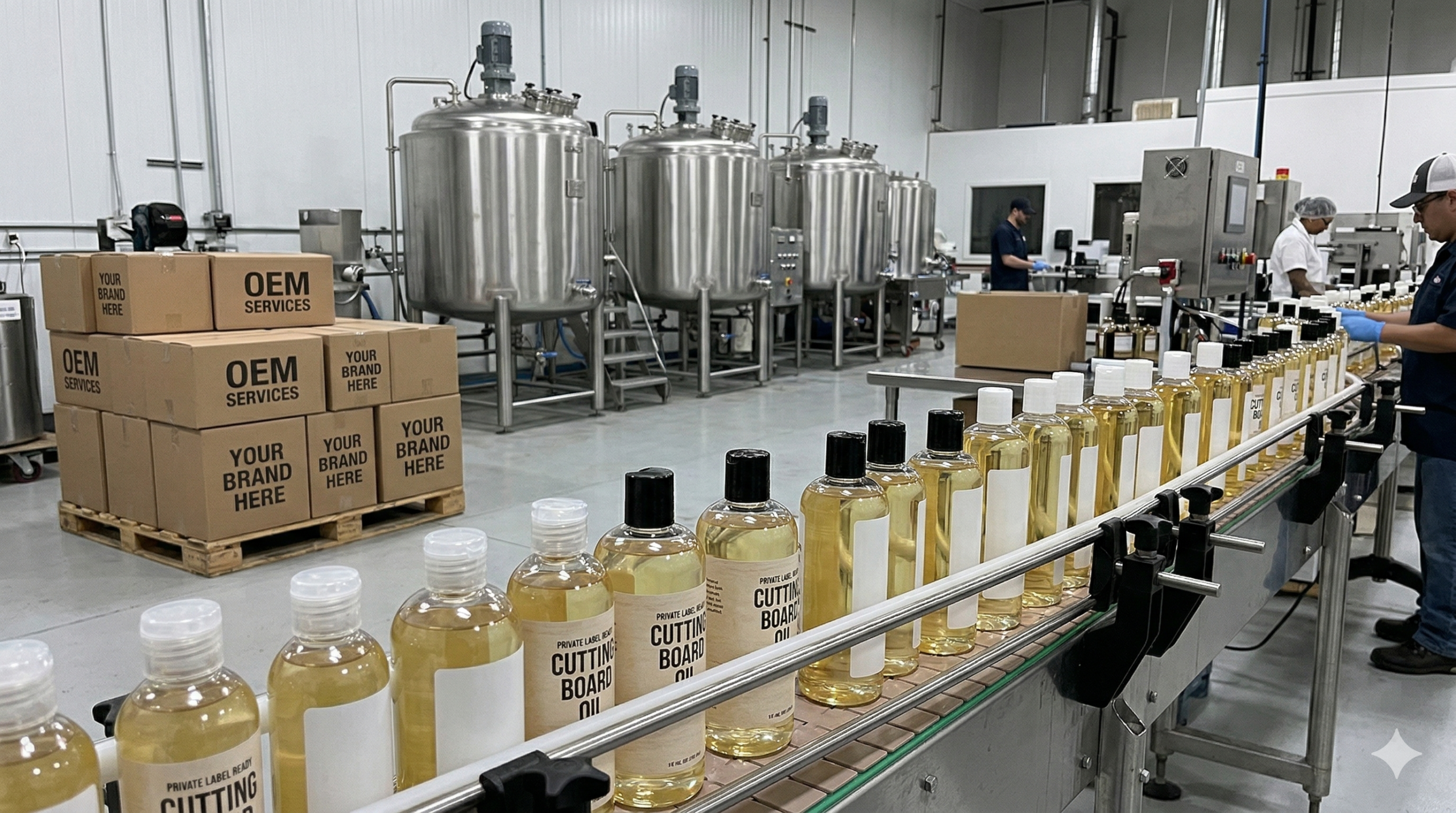
Once you understand the profit model, how do you actually execute? Don’t be an idiot and try to build your own production line. Find a source factory that actually understands kitchen care brands to do the heavy lifting. But watch these core elements like a hawk: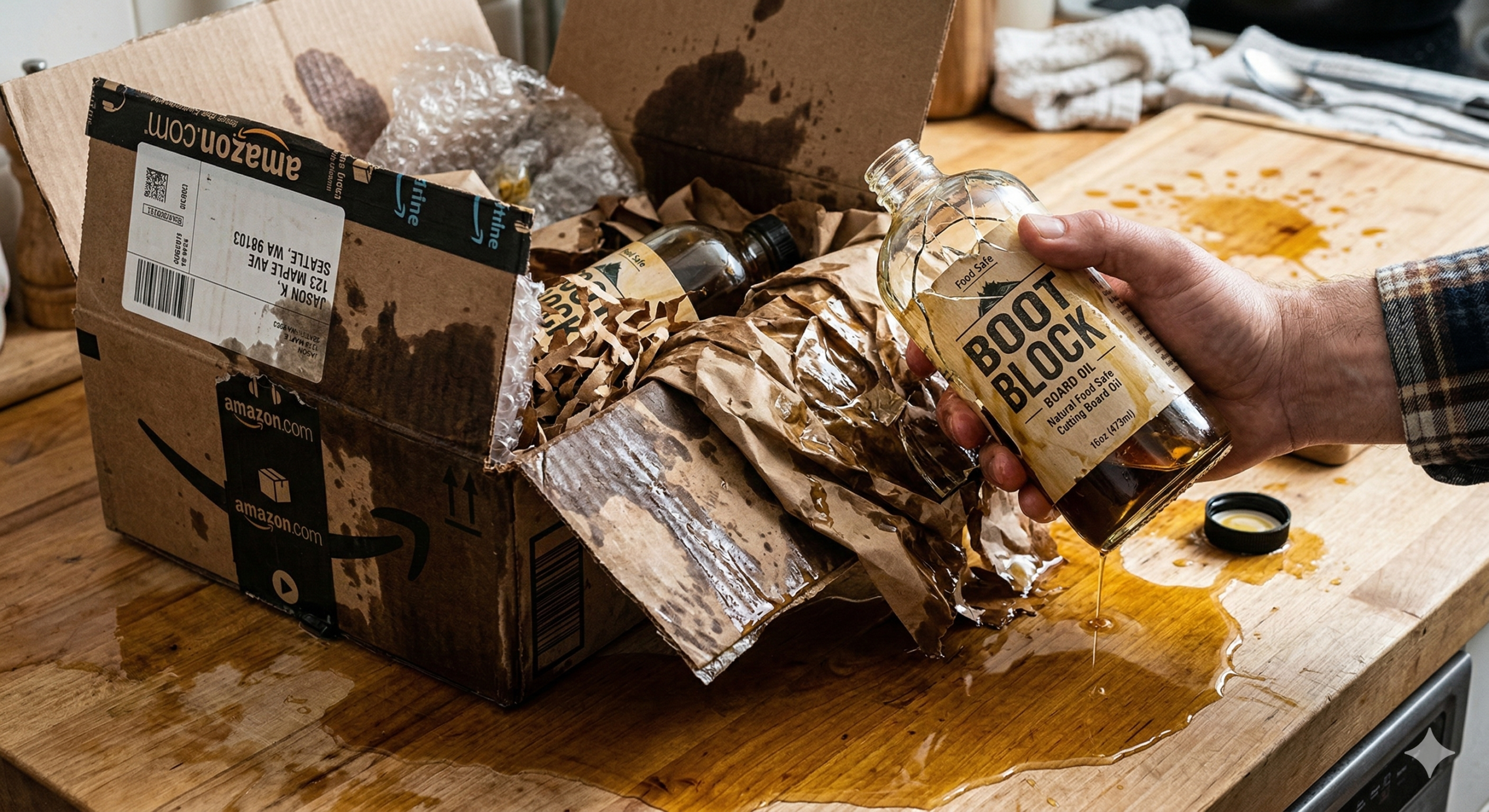
- Demand Hard Certifications: Don’t listen to sales pitches. Ask them straight up to produce their raw material SDS and food-grade contact certifications. If they can’t? Block them. Without these, your inventory won’t even survive Amazon’s Hazmat Review.
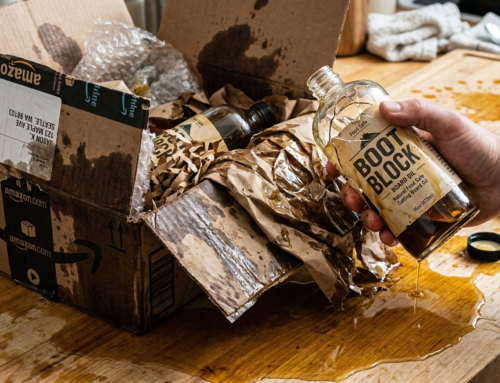
- The Devil is in the Sealing Process: No matter how good the oil is, if it goes through weeks of ocean freight and sits in a scorching summer FBA warehouse with bad packaging, it will leak until you question your life choices. The factory must perform strict air-tightness testing on the production line — matched to your specific product’s penetration rate and packaging format. Are you really brave enough to ship goods overseas without that?
- Flexible Supply Chain Support: Find a factory that supports reasonable MOQs for market testing. Take a small batch of precisely targeted formulas to test market feedback first. Once the funnel works, then scale up the volume.
In an era where profit margins are razor-thin, stop fighting purely on price. Equip your core products with a professional “ammunition depot,” and turn one-time buyers into loyal, long-term customers. That is how smart business is done.
Launching a private label cutting board oil shouldn’t require massive inventory risks or a PhD in formulation chemistry. That’s exactly the gap we built Texcera Custom to fill.
- ✅ Small-batch manufacturing — test before you scale
- ✅ Low MOQs — no six-figure inventory commitment upfront
- ✅ Deep customization — USP mineral oil, beeswax blends, vegan plant-oil lines, your label and packaging
- ✅ Food-safe compliance — full SDS and food-contact certifications provided
Ready to build your private label cutting board oil line? Let’s put together your custom formula.
👉 Contact us today or email us directly at texceracustom@gmail.com.
Plan a Private Label Cutting Board Oil Program
Start with the intended wood types, ingredient direction, application feel, bottle size, closure, sales channel and destination market. These details help determine the sampling route, packaging compatibility checks, documentation scope and production plan. Minimum order quantity is confirmed after the formula and package are selected.
Review our private label cutting board oil, natural cutting board oil, cutting board wax and the full kitchen and wood care collection.
Send your product brief to request samples and a manufacturing quotation.