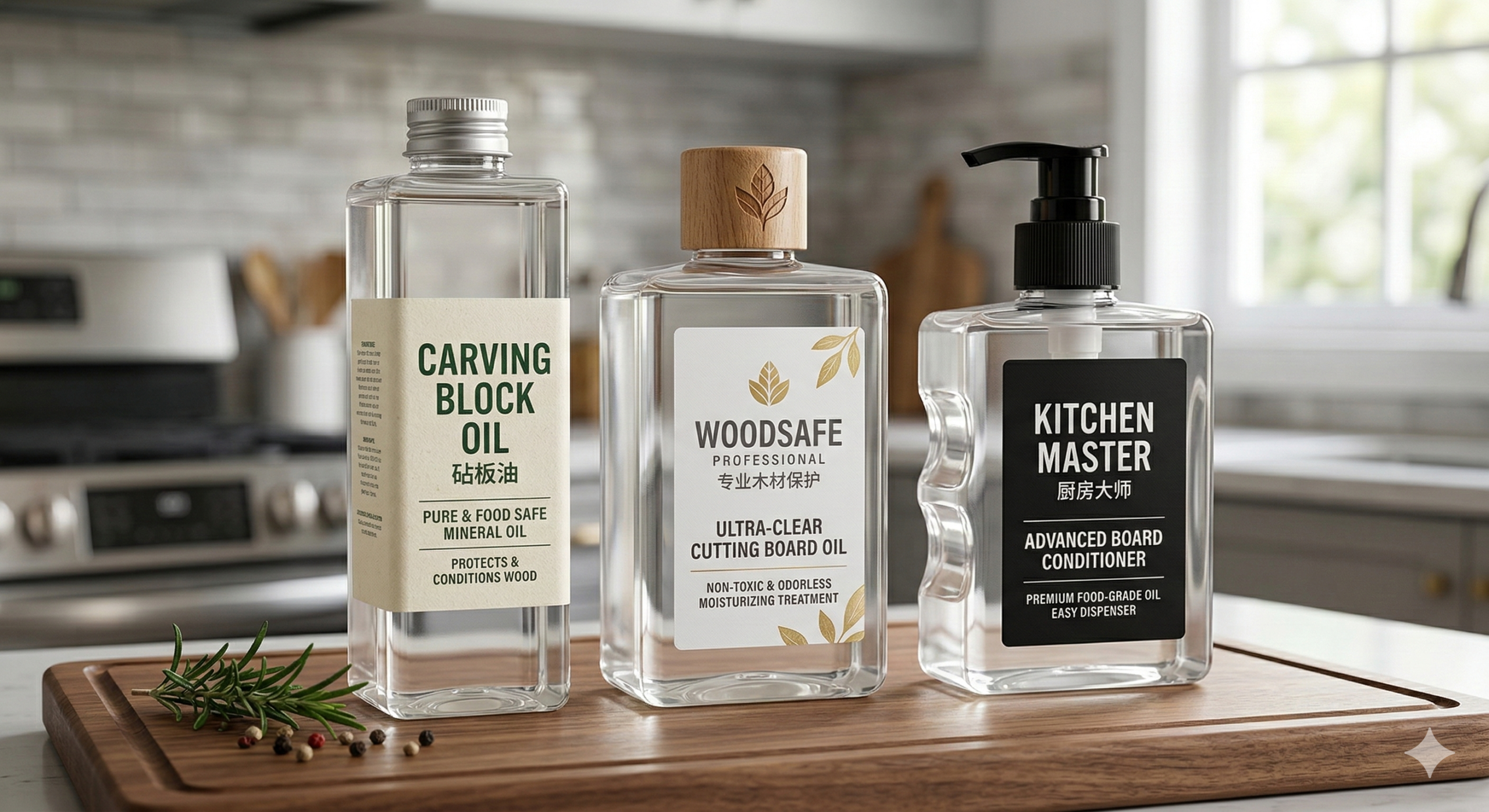
Designers love square bottles. They look modern, premium, and stand out on the shelf. Factory managers hate square bottles. They are a nightmare to label.
If you have ever tried to apply a sticker to a square surface, you know the struggle: if it is off by even 1 millimeter, the whole bottle looks cheap. Most contract manufacturers will tell you: “Just switch to a round bottle, it’s easier.”

But we aren’t a typical factory.
When a client approached us with a stunning square packaging design for their wood care line, we didn’t ask them to change the design. We changed our equipment.
The Challenge
Standard labeling machines are built for cylinders. When used on square bottles, they often leave air bubbles at the corners or result in crooked labels. For a high-end brand, “good enough” wasn’t acceptable.

The Solution Instead of outsourcing or forcing a high MOQ to buy a new $50,000 machine, our in-house engineering team modified our labeling line. We developed a custom alignment jig specifically for this client’s bottle dimensions.
It took us two weeks of tinkering and testing, but the result was worth it: Perfectly aligned labels, zero bubbles, and a consistent look across 10,000 units.
This is the difference between working with a giant mass-production plant and a specialized formulation studio. We adapt to your vision, not the other way around.
Have a “difficult” packaging idea? Let’s figure out how to make it real.
Why Square Bottle Labeling Creates Production Challenges
Square and rectangular bottles can give a premium product a strong shelf presence, but they demand tighter label placement than a round container. A small rotation error becomes obvious because the label edges no longer align with the bottle panels. Corners, panel width, bottle tolerances and label stiffness can also affect adhesion and visual consistency.
The challenge grows when front and back labels must match, when the cap has a preferred orientation or when the artwork uses borders that make every variation visible. Before production, the bottle, label material, adhesive and artwork dimensions should be reviewed together rather than as separate purchasing decisions.
How We Developed a Custom Alignment Solution
For this project, the packaging concept was valuable to the brand, so changing to a round bottle was not the preferred answer. The practical route was to study the container geometry, establish reference points and build a repeatable positioning method for the labeling operation.
Production samples were then used to check label size, panel fit, edge position and visual alignment. Inspection criteria gave operators a consistent standard for accepting or correcting each bottle. This type of fixture-based approach can improve repeatability, but the exact solution must be designed around the selected package and label.
What Private Label Brands Can Learn from the Project
- Confirm packaging geometry before finalizing label artwork.
- Test production-representative bottles instead of relying only on drawings.
- Allow tolerances for bottle molding, label cutting and application.
- Define visible quality criteria before the first production run.
- Evaluate the full pack, including closure orientation and shipping protection.
Plan a Custom Packaging and Manufacturing Project
TexCera Custom supports growing brands with formula development, packaging review, labeling and flexible small-batch manufacturing. Browse our private label product range, see why brands work with us, or review the main square bottle project page.
Send your bottle, label and product requirements for an initial manufacturing review.