
In the world of wood care, there is a common misconception among new brand owners: “The thicker the oil, the better the quality.”
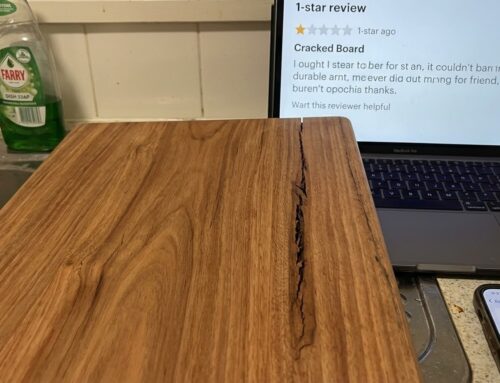
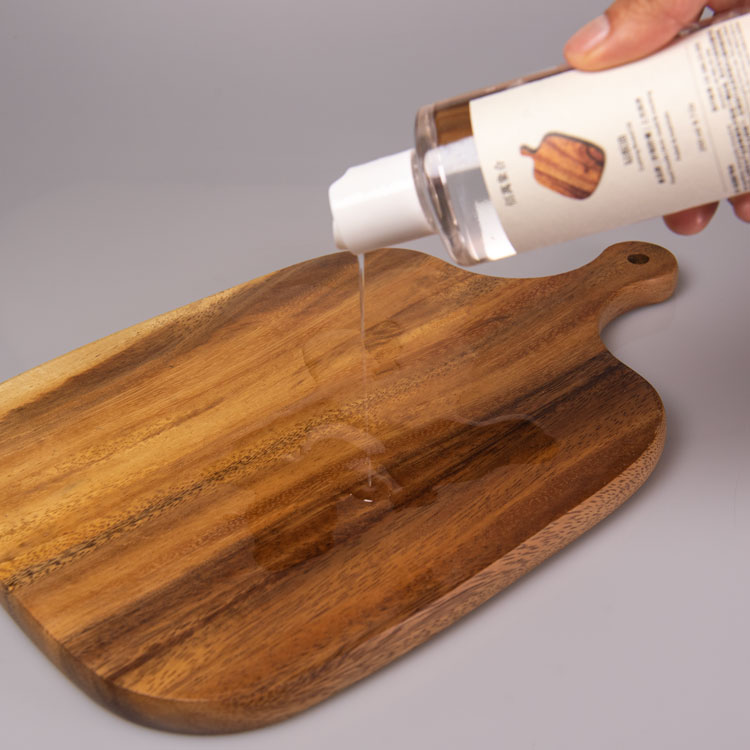
I get it. When you pour a thick, honey-like oil onto a sample, it looks rich. It sits there, shiny and substantial. But here is what happens when you take that product home: It stays on the surface.
At our studio, we take a different approach to formulation. We don’t design our food-grade mineral oil to look good in the bottle; we design it to work inside the wood.
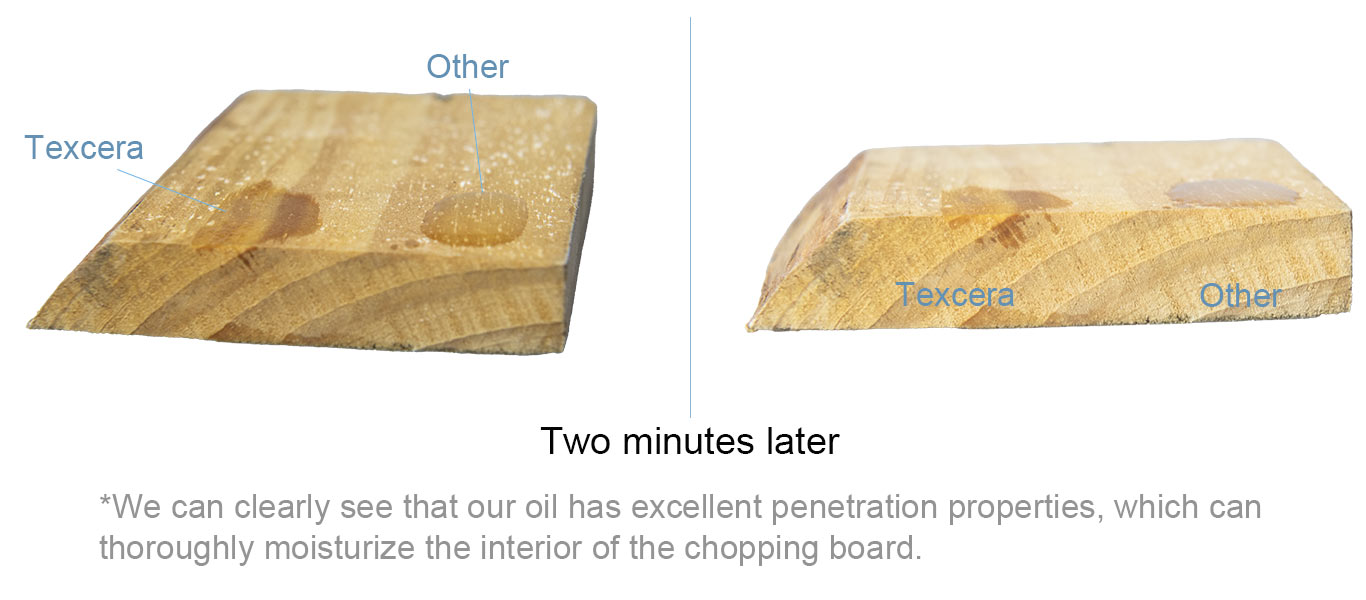
The “Raincoat” vs. “Lotion” Analogy Imagine wearing a rubber raincoat. It keeps water out, but it sits on top of your skin. That is high-viscosity oil. Now imagine applying a high-quality lotion. It disappears into your skin, nourishing it from within. That is our low-viscosity formula.
Why We Choose Low-Viscosity?
Speed of Absorption: When we tested standard market oils against our formula on hard maple boards, our oil was fully absorbed in under 45 seconds. The thicker competitor? It took nearly 5 minutes and still left a sticky residue.
Deep Fiber Protection: Wood cracks because it dries out from the inside. A thinner molecule can navigate the tight grain of hardwoods (like walnut or teak) much deeper than a thick molecule can.
The “Non-Greasy” Promise: Your customers want to use their cutting boards, not slide food off them. Our formula leaves a matte, dry-to-touch finish that feels natural, not synthetic.
If you are building a premium kitchenware brand, stop looking for the “thickest” oil. Look for the one that actually does the job.
What Cutting Board Oil Viscosity Actually Changes
Viscosity affects how an oil spreads, enters the wood grain and feels after application. A thicker appearance in the bottle does not automatically mean better conditioning. The useful target depends on the wood species, surface preparation, application method and the finish customers expect.
For a private label program, we evaluate absorption behavior together with wipe-off time, residual feel and packaging compatibility. Samples should be tested on the intended wood rather than judged by appearance alone. Product directions and marketing claims must match the final approved formula and its intended use.
Turn Performance Requirements into an OEM Brief
A clear development brief helps convert customer expectations into measurable product decisions. Useful inputs include:
- Target wood types and whether the product is for cutting boards, butcher blocks or general wood care.
- Preferred application feel, absorption time, finish and maintenance frequency.
- Bottle size, closure, dispensing method, label format and destination market.
- Estimated order quantity, target price range and required documentation.
TexCera Custom can review an existing concept, provide samples from an available base or discuss adjustments for your brand. Final production specifications, minimum order quantity and claims are confirmed after formula and packaging review.
Related Private Label Wood Care Products
Compare our private label cutting board oil, natural cutting board oil and cutting board wax. You can also explore the complete kitchen and wood care range.
Request a sample or discuss your private label wood care project.